Česky (EUR)
 Deutsch (EUR)
 Polski (EUR)
 български език (EUR)
How to choose the right static mixer?
The Ideal Static Mixer for Your Application
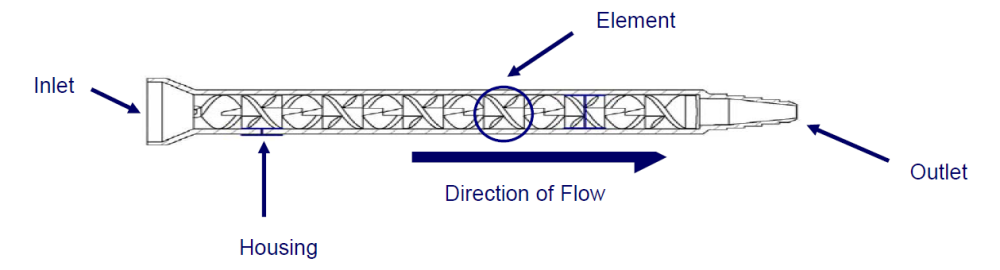
A static mixer (mixing nozzle) is the heart of every two-component system. Although it contains no moving parts, its internal geometry defines the quality of the final mixture. It is a key element for achieving a perfect chemical reaction of the materials.
Static Mixing Theory
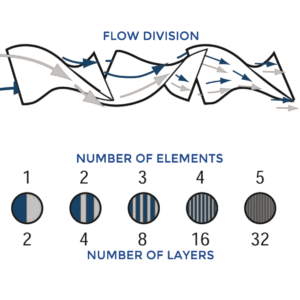
Materials A and B are forced into the mixer under pressure in a precise ratio. Inside, they encounter a series of alternatingly inclined elements that constantly divide and layer the material stream. By the end of the mixer, the material has been layered so many times that a perfectly homogeneous mixture is created at the outlet.
Optimal Number of Elements by Material
Diameter Selection Based on Viscosity
| Viscosity Range | Element Diameter |
|---|---|
| Low (< 5,000 cps) – like syrup | 2.36 – 6.35 mm |
| Medium (5,000 – 50,000 cps) – between honey and ketchup | 5.4 – 8 mm |
| High (> 50,000 cps) – thicker than ketchup | > 9.3 mm |
💡 Golden Rule: When mixing liquids with two different viscosities, always select the mixer based on the component with the HIGHER viscosity.
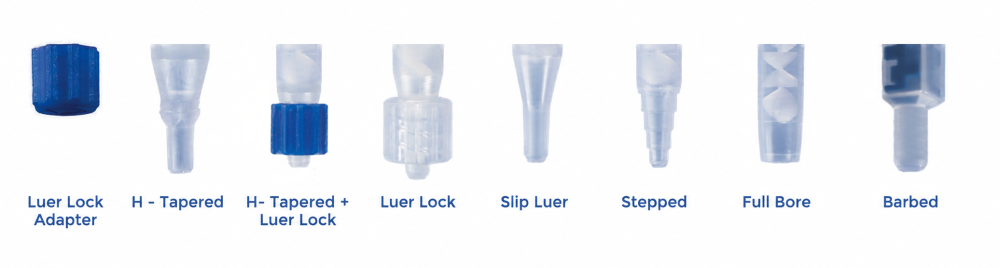
Specific Outlets
Each type of mixer outlet provides specific advantages for different applications and connections to dispensing needles.